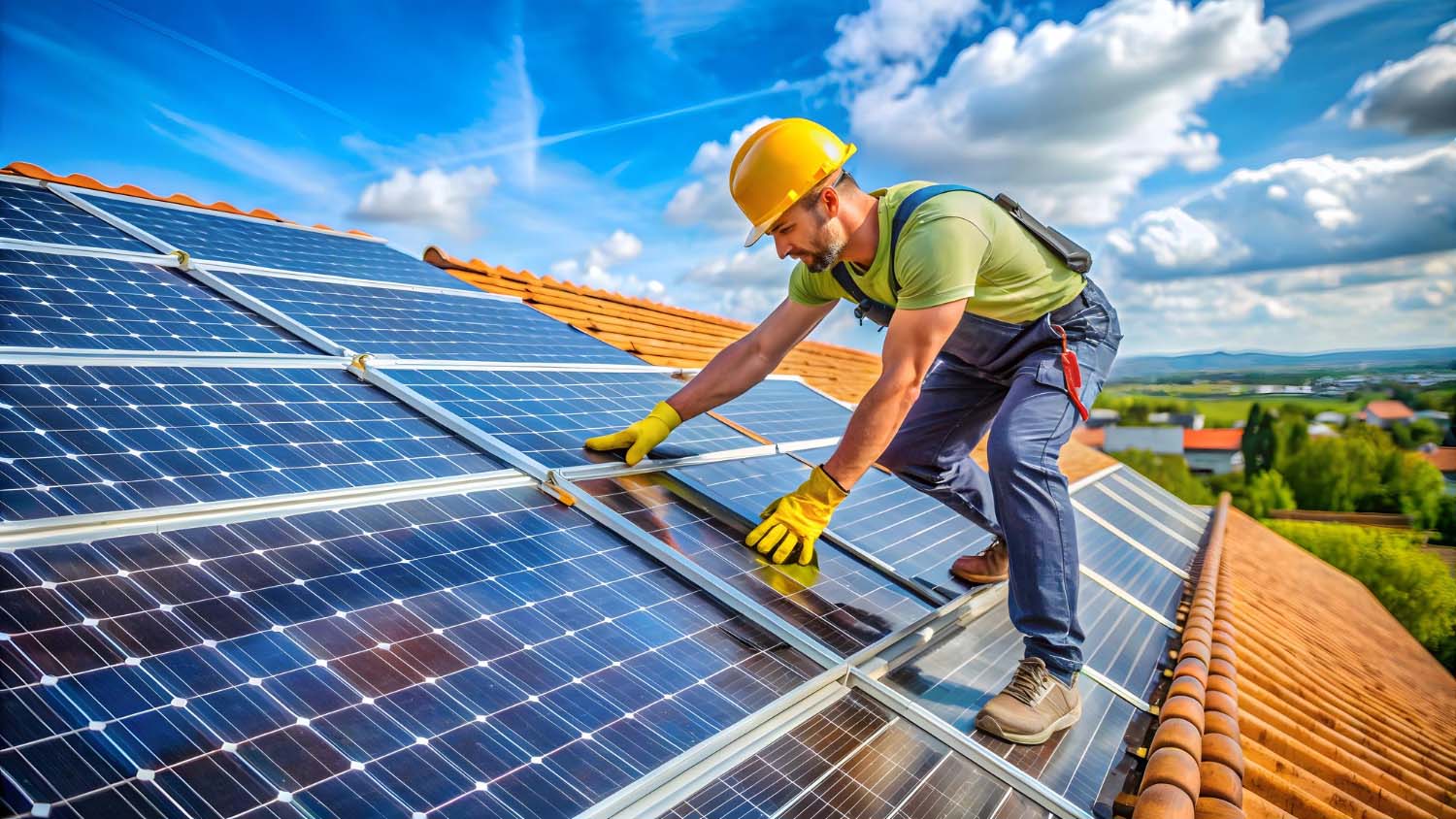
With immense knowledge and experience in installing solar panels and other technology across structures of all shapes and sizes, our installation team will help you in every step of the process of setting up your solar product.
Obtain any required local permits and approvals before installation. Many municipalities require specific permits for solar systems, which might include electrical, structural, and zoning approvals.
Clear any obstructions from the roof or ground area where the panels will be installed.
For roof-mounted systems, install racking or mounting brackets directly onto the roof. This involves drilling holes and securely anchoring the mounts to ensure the panels stay in place under various weather conditions.
For ground-mounted systems, set up a frame in a designated area, usually involving posts that are cemented into the ground to secure the panels.
Attach solar panels to the mounting structure, securing them in place with bolts or clamps. The angle of the panels is typically set to optimize sun exposure based on location, though some systems have adjustable or tracking mounts to follow the sun’s movement.
Install the inverter(s), either near the array (for microinverters) or in a central location (for string or central inverters). The inverter converts DC power from the panels to AC power for home or grid use.
If the system includes battery storage, connect the inverter to the battery bank. Batteries store excess power for later use, offering backup power and enabling off-grid capabilities.